Embarking on a hiking or camping adventure requires careful consideration of gear. Weight is a paramount factor, influencing both comfort and enjoyment. This exploration delves into the world of lightweight travel gadgets designed to enhance your outdoor experience without compromising essential functionality. We’ll examine crucial categories, from navigation and cooking to power solutions and water purification, highlighting innovative materials and efficient designs.
The journey towards a lighter pack involves strategic choices. Understanding the trade-offs between weight, durability, and performance is crucial. This guide helps you make informed decisions, ensuring you have the right equipment for your specific needs, whether you’re backpacking deep into the wilderness or car camping for a weekend getaway. We’ll cover essential gadgets, power options, water management, clothing considerations, and even helpful resources for planning your next adventure.
Defining “Lightweight” in Travel Gadgets
Defining “lightweight” for travel gadgets is subjective and depends heavily on the type of trip and the individual’s tolerance for carrying weight. What’s considered lightweight for a car camper might be excessively heavy for a backpacking enthusiast. The ideal weight for a given gadget represents a balance between functionality, durability, and the overall weight capacity of the traveler.The trade-off between weight, functionality, and durability is a crucial consideration.
Generally, reducing weight often involves sacrificing some level of functionality or durability. For instance, a super lightweight tent might be more susceptible to tearing, while a heavier, more durable tent offers better protection but adds significant weight to your pack. Similarly, a compact, lightweight stove might boil water slower than a bulkier, more powerful model. The optimal choice depends on prioritizing one factor over the others based on the specific needs of the trip.
Weight Classifications for Lightweight Travel Gadgets
Different weight classifications apply depending on the type of outdoor adventure. Backpacking necessitates the most stringent weight limits, followed by general hiking, and finally car camping where weight is a lesser concern. While there aren’t universally accepted weight cutoffs, the following provides a general guideline:* Backpacking: Gadgets generally need to fall under 10 ounces (283 grams) to be considered truly lightweight.
This often requires compromises on durability and sometimes even functionality. Anything above 1 pound (453 grams) is generally considered too heavy for most backpacking applications.* General Hiking: The weight limit is more relaxed, with items weighing up to 1.5 pounds (680 grams) potentially acceptable depending on the length and intensity of the hike. This allows for more robust and functional gadgets.* Car Camping: Weight is significantly less critical.
Items weighing several pounds are common and acceptable, as the weight is not carried on the person’s back.
Comparison of Lightweight Travel Gadgets
The following table illustrates the weight and features of some popular lightweight travel gadgets, demonstrating the trade-offs involved.
| Weight (oz) | Gadget Type | Features | Typical Use Case |
|---|---|---|---|
| 7 | Titanium Spork | Lightweight, durable, heat-resistant | Backpacking, hiking, camping |
| 12 | Mini Headlamp | High-intensity LED, adjustable brightness, water-resistant | Backpacking, hiking, night camping |
| 15 | Lightweight Water Filter | High flow rate, removes bacteria and protozoa | Backpacking, hiking |
| 20 | Compact Camping Stove | Efficient fuel consumption, lightweight, easy to set up | Backpacking, hiking, car camping |
Essential Lightweight Gadgets for Hikers and Campers
Selecting the right gear is crucial for a comfortable and successful hiking or camping trip. The weight you carry significantly impacts your overall experience, so prioritizing lightweight yet durable gadgets is paramount. This section details essential lightweight gadgets categorized by function, highlighting their benefits and the innovative materials used in their construction.
Navigation Gadgets
Lightweight navigation is essential for staying on course and avoiding getting lost, especially in unfamiliar terrain. A lightweight GPS device or a reliable map and compass combination significantly reduces the burden in your backpack while ensuring you reach your destination safely.
- Lightweight GPS Device: These devices, often utilizing advanced GPS technology and incorporating features such as altimeters and barometers, provide accurate location data and navigational assistance. Their compact size and lightweight construction, often achieved through the use of high-strength plastics and durable yet lightweight aluminum alloys, make them ideal for hiking and camping. The reduced weight minimizes fatigue during extended trips.
- Map and Compass: A classic and reliable navigation system, a lightweight, waterproof map and a durable, lightweight compass are still essential backups. Modern maps are often printed on tear-resistant, lightweight synthetic materials. Compasses utilize lightweight yet strong materials, allowing for accurate readings without adding significant weight to your pack.
Cooking Gadgets
Lightweight cooking equipment allows you to prepare meals efficiently without sacrificing culinary enjoyment. Choosing compact and lightweight options saves space and reduces strain on your back.
- Titanium Cookware: Titanium is known for its exceptional strength-to-weight ratio. Titanium pots and pans are significantly lighter than their stainless steel counterparts, offering durability without the added weight. This allows for carrying more food and other essentials.
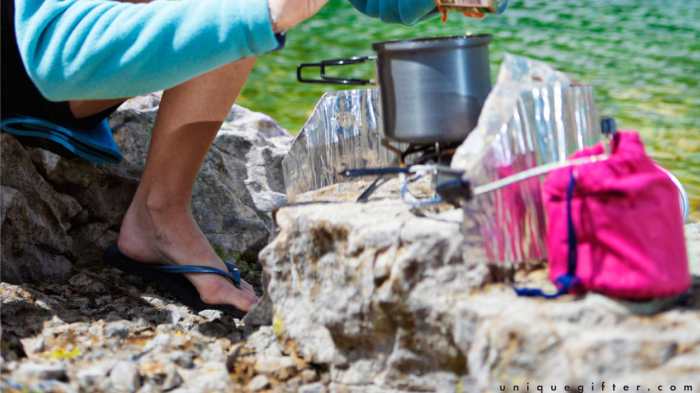
- Lightweight Stove: Compact, lightweight backpacking stoves, often fueled by isobutane or canister fuel, provide efficient and quick cooking. Many utilize innovative designs and lightweight materials like aluminum alloys, making them ideal for reducing pack weight.
- Biodegradable Spork: A single utensil made from lightweight and biodegradable materials, reducing both weight and environmental impact.
Lighting Gadgets
Reliable lighting is crucial for navigating in low-light conditions and performing tasks around camp. Lightweight and energy-efficient options are a must-have for hikers and campers.
- LED Headlamp: LED headlamps are exceptionally energy-efficient and lightweight. Modern designs incorporate powerful LEDs in compact housings made from lightweight, durable plastics. Their adjustable brightness settings and long battery life make them indispensable for night hiking and camping.
First Aid Gadgets
A lightweight first-aid kit is crucial for handling minor injuries and emergencies. Selecting lightweight yet durable materials ensures that you are prepared without unnecessary weight.
- Lightweight First-Aid Kit: A compact first-aid kit containing essential supplies packaged in a lightweight, waterproof bag made from ripstop nylon or similar durable, lightweight material. The kit should contain lightweight bandages, antiseptic wipes, pain relievers, and other essential items.
Shelter Gadgets
Lightweight shelter options provide protection from the elements without weighing you down. Choosing lightweight materials and innovative designs is crucial for comfort and mobility.
- Lightweight Tent: Modern tents utilize lightweight yet durable fabrics such as nylon and polyester with silicone or polyurethane coatings for water resistance. Innovative designs incorporate lightweight poles made from aluminum or carbon fiber, minimizing weight without sacrificing strength and stability. The use of these materials significantly reduces the overall weight of the tent.
- Lightweight Emergency Blanket: An ultralight, space-saving emergency blanket provides warmth and protection in unexpected situations. These blankets are typically made from a thin, reflective material that is lightweight and compact for easy storage.
Power Solutions for Lightweight Travel
Maintaining a charge on your electronic devices while hiking or camping is crucial for navigation, communication, and entertainment. Lightweight power solutions are essential for minimizing pack weight without sacrificing functionality. This section will explore various options, comparing their efficiency and weight to help you choose the best fit for your adventures.Power sources for lightweight travel fall into several categories, each with its own set of advantages and disadvantages.
The ideal choice depends on the length and type of trip, the number of devices needing charging, and your tolerance for weight. Factors such as sunlight availability, personal strength (for hand-crank generators), and the importance of portability should be considered.
Solar Chargers
Solar chargers offer a sustainable and environmentally friendly way to power your devices. They typically consist of a solar panel that converts sunlight into electricity, which is then stored in a built-in battery or used to directly charge your devices. The efficiency of a solar charger depends on the size of the panel, the intensity of sunlight, and the efficiency of the conversion process.
Lightweight solar chargers are available, often utilizing flexible, foldable designs to minimize bulk. However, their charging speed can be slower compared to other methods, and they are entirely reliant on sufficient sunlight.
Portable Power Banks
Portable power banks are rechargeable batteries that can store energy and provide power to your devices on demand. They are incredibly versatile and convenient, offering a reliable power source regardless of weather conditions. Their weight varies greatly depending on their capacity (measured in mAh – milliampere-hours). Higher capacity means more charges, but also greater weight. Choosing a power bank with the right capacity for your needs is crucial for balancing weight and usability.
Many power banks now incorporate fast-charging capabilities, allowing for quicker replenishment of your devices.
Hand-crank Generators
Hand-crank generators are a completely self-powered option, requiring only physical effort to generate electricity. They are ideal for emergencies or situations where solar power or other external power sources are unavailable. However, they require significant manual effort, and the power output is typically lower compared to solar chargers or power banks. The weight of a hand-crank generator is relatively low, but the physical exertion needed for sufficient charging may be a limiting factor for some users.
This is often a backup option rather than a primary power source.
Comparison of Lightweight Power Solutions
| Power Source | Pros | Cons | Typical Weight (approx.) |
|---|---|---|---|
| Solar Charger | Sustainable, environmentally friendly, lightweight (when folded), no external power needed | Reliant on sunlight, slower charging speed, can be bulky when unfolded | 100-500g |
| Portable Power Bank | Convenient, reliable, fast charging capabilities available, works regardless of weather | Requires initial charging, weight can be significant depending on capacity | 100-500g (varies greatly with capacity) |
| Hand-crank Generator | Self-powered, good for emergencies, relatively lightweight | Requires significant physical effort, slow charging speed, low power output | 100-300g |
Water Purification and Storage for Lightweight Travel
Safe and reliable water purification and storage are paramount for hikers and campers, especially on extended trips where access to potable water is limited or uncertain. Choosing the right system depends heavily on factors such as trip duration, the anticipated water sources, and personal preferences regarding weight and ease of use. This section explores various lightweight options for both purification and storage, aiding in the selection of a system tailored to individual needs.
Lightweight Water Purification Methods
Selecting a water purification method involves considering several factors, including the weight, speed of purification, effectiveness against different contaminants, and ease of use. Each method offers distinct advantages and disadvantages.
- Water Filters: These physically remove sediment, bacteria, and protozoa. Microfilters remove larger contaminants, while ultrafilters remove smaller ones, including many viruses. They are generally faster than purification tablets but require more maintenance, such as backflushing or replacement of filter cartridges. Lightweight options are available, often employing hollow fiber or ceramic filter technology.
- Water Purification Tablets: These chemical tablets typically contain iodine or chlorine dioxide, which kill bacteria and viruses. They are lightweight and compact, making them ideal for emergencies or shorter trips. However, they require longer contact time for effective purification and may alter the taste of the water. Some individuals may also experience digestive upset with prolonged use of iodine tablets.
- UV Sterilizers: These handheld devices use ultraviolet light to kill microorganisms in water. They are effective against bacteria and viruses but do not remove sediment or other particulate matter. They are generally faster than tablets but require a power source (usually batteries) and clear water for effective treatment. Their effectiveness can be reduced by cloudy water.
Lightweight Water Storage Solutions
The choice of water storage solution impacts both comfort and weight. Each option presents a unique set of benefits and drawbacks.
- Collapsible Water Bottles: These silicone or nylon bottles fold down for easy packing when empty, saving significant space. They are lightweight and durable but may not be as robust as hard-shell bottles and can be prone to punctures. They typically hold less water than bladders.
- Hydration Bladders: These flexible reservoirs are designed to fit inside backpacks, providing convenient access to water through a drinking tube. They offer larger capacities than collapsible bottles but can be more challenging to clean and are potentially more prone to leaks if punctured.
Selecting a Water Purification and Storage System
The ideal system depends on the specific circumstances of the trip.
For short trips (1-3 days) with reliable water sources, purification tablets or a lightweight UV sterilizer paired with a collapsible water bottle might suffice. The lighter weight and compact size are ideal for shorter excursions.
Longer trips (3+ days) in remote areas with less certain water sources may benefit from a more robust system, such as a water filter combined with a hydration bladder or multiple collapsible bottles. The increased capacity and reliability of filtration are important for longer durations.
Trips to areas with questionable water quality necessitate a high-quality water filter capable of removing bacteria, viruses, and protozoa. A combination of filtration and purification tablets (as a backup) could provide an extra layer of security. Consider the type of contaminants likely present in the water source (e.g., Giardia, bacteria).
Trips in hot climates will require carrying more water. A larger capacity hydration bladder or multiple collapsible bottles might be necessary to account for increased fluid loss. Regularly checking water levels and planning refill points is crucial.
Lightweight Clothing and Gear
Choosing the right clothing is crucial for comfortable and efficient hiking and camping. The weight of your clothing significantly impacts your overall pack weight, affecting your energy levels and enjoyment on the trail. Prioritizing lightweight, yet durable, clothing is essential for a successful trip.Lightweight clothing utilizes advanced materials and designs to maximize performance while minimizing weight. Understanding the properties of these materials and how to layer them effectively is key to staying comfortable in diverse weather conditions.
This section will explore suitable materials and essential clothing items for various climates and activities.
Layering Clothing for Weather Conditions
Effective layering is vital for regulating body temperature across changing weather conditions. The layering system typically involves three layers: a base layer, a mid-layer, and an outer layer. The base layer wicks moisture away from the skin, keeping you dry and comfortable. The mid-layer provides insulation, trapping warmth and regulating temperature. The outer layer acts as a shell, protecting you from wind, rain, and snow.
By adjusting the layers, you can adapt to fluctuating temperatures and maintain optimal comfort throughout your journey. For example, in cold conditions, all three layers might be worn, while in warmer weather, the mid-layer or outer layer might be removed.
Materials Used in Lightweight Hiking and Camping Clothing
Several materials are commonly used in lightweight hiking and camping clothing, each offering unique benefits. Merino wool is known for its excellent moisture-wicking, odor-resistance, and natural insulation properties. Synthetic fabrics like polyester and nylon are durable, quick-drying, and relatively inexpensive. These often utilize technologies like ripstop weave for increased tear resistance. Down is a highly effective insulator, offering exceptional warmth-to-weight ratio, but requires careful consideration of its susceptibility to moisture.
Finally, advanced synthetic insulations, such as PrimaLoft®, offer comparable warmth to down, while being more resistant to moisture. The choice of material depends on the specific needs and preferences of the hiker or camper, as well as the anticipated weather conditions.
Essential Lightweight Clothing Items
The selection of essential lightweight clothing items depends significantly on the climate and the type of activity.
For temperate climates and moderate activities:
- A lightweight, moisture-wicking base layer (e.g., merino wool or synthetic t-shirt).
- A lightweight, quick-drying hiking pants or shorts.
- A lightweight fleece jacket or insulated vest for warmth.
- A waterproof and windproof shell jacket.
- Hiking socks made of merino wool or synthetic materials.
For cold climates and strenuous activities:
- Multiple layers of merino wool or synthetic base layers.
- Insulated mid-layers, such as a fleece jacket or down jacket.
- A durable, waterproof and windproof shell jacket.
- Insulated hiking pants or bibs.
- Warm, moisture-wicking socks.
- Gloves or mittens.
- A warm hat.
For hot and humid climates:
- Lightweight, breathable base layers.
- Lightweight, quick-drying shorts or hiking skirt.
- A wide-brimmed hat for sun protection.
- A light rain jacket for unexpected showers.
- Moisture-wicking socks.
Exploring Related Travel Aspects
Planning a successful hiking or camping trip involves more than just packing lightweight gear. Successfully navigating the logistical and safety aspects is crucial for a rewarding experience. This section explores key elements that contribute to a well-organized and enjoyable outdoor adventure.
Reliable Travel Insurance Providers for Outdoor Activities
Securing comprehensive travel insurance is paramount, especially for activities involving inherent risks. Policies should cover medical emergencies, evacuation costs, trip cancellations, and potential equipment damage. Several reputable providers specialize in outdoor adventure coverage. Consider researching and comparing policies from companies like World Nomads, Allianz Travel, and Travel Guard, ensuring the chosen plan adequately covers your specific activities and destination.
Useful Travel Apps for Hiking and Camping Trips
Modern technology offers invaluable tools for planning and executing outdoor trips. Navigation apps like Gaia GPS and AllTrails provide detailed maps, trail information, and user reviews. Weather apps, such as AccuWeather and The Weather Channel, deliver hyperlocal forecasts crucial for making informed decisions regarding safety and trip planning. These apps can significantly enhance the overall experience by offering real-time data and convenient access to essential information.
Sample Travel Itinerary for a 3-Day Hiking Trip
This sample itinerary assumes a moderate fitness level and access to a vehicle. Adjustments should be made based on individual capabilities and chosen location.
| Day | Activity | Accommodation |
|---|---|---|
| Day 1 | Arrive at trailhead, hike to designated campsite (approx. 5 miles), set up camp. | Backcountry campsite |
| Day 2 | Day hike to a scenic overlook (approx. 8 miles round trip), explore the surrounding area. | Same backcountry campsite |
| Day 3 | Pack up camp, hike back to trailhead (approx. 5 miles), depart. | N/A |
Researching Travel Destinations: Permits and Trail Conditions
Thorough destination research is vital. This includes checking for necessary permits, understanding trail conditions (difficulty, length, elevation gain), and assessing potential hazards like wildlife encounters or weather patterns. Official park websites and local ranger stations are invaluable resources for acquiring accurate and up-to-date information. Failing to adequately research can lead to unexpected challenges and safety risks.
Resources for Finding Travel Deals and Discounts
Numerous websites and platforms offer travel deals and discounts. Websites like Expedia, Kayak, and Booking.com provide price comparisons for flights and accommodation. Consider utilizing discount travel sites such as Groupon or LivingSocial for potential deals on outdoor gear or experiences. Additionally, subscribing to newsletters from outdoor retailers can often provide access to exclusive sales and promotions.
Benefits of Using Travel Blogs and Guides for Planning Outdoor Adventures
Travel blogs and guides offer first-hand accounts and practical advice from experienced adventurers. These resources provide insights into hidden gems, potential challenges, and essential gear recommendations. Reading reviews and firsthand experiences can help you make informed decisions and better prepare for your trip, offering a more personalized and realistic understanding of your destination than generic travel guides.
Checklist of Travel Essentials for a Hiking or Camping Trip
A comprehensive checklist ensures you don’t overlook essential items. This list is not exhaustive and should be adapted based on the specific trip and conditions.
- Backpack
- Tent
- Sleeping bag and pad
- Cooking stove and fuel
- Cookware and utensils
- Food and water
- First-aid kit
- Navigation tools (map, compass, GPS)
- Headlamp or flashlight
- Sunscreen and insect repellent
- Appropriate clothing and footwear
- Rain gear
Successfully navigating the complexities of lightweight gear selection ultimately enhances your outdoor adventures. By prioritizing essential items, opting for innovative materials, and strategically choosing power and water solutions, you can significantly reduce your pack weight without sacrificing functionality or safety. Remember, thorough planning and preparation are key to a successful and enjoyable trip. Embrace the challenge of minimizing weight, maximize your experience, and enjoy the journey!
FAQ Corner
What is the best lightweight tent for backpacking?
The “best” tent depends on your needs and budget. Look for single-wall tents for minimal weight, but consider ventilation. Read reviews focusing on ease of setup and weather resistance.
How do I choose a lightweight sleeping bag?
Consider the temperature rating appropriate for your planned trips. Down is lighter than synthetic fill, but loses insulation when wet. Synthetic fills are more durable in damp conditions.
Are lightweight cooking systems worth it?
Lightweight cooking systems save weight and space. Consider your cooking style – some prefer simple stove systems, while others opt for integrated pot sets.
How can I maintain lightweight gear?
Proper cleaning and storage are crucial. Follow manufacturer instructions for cleaning and drying. Store gear in a dry, cool place to prolong its lifespan.


